All The Pawsabilities

All the Pawsabilities


About Us - Sadey and Murphy
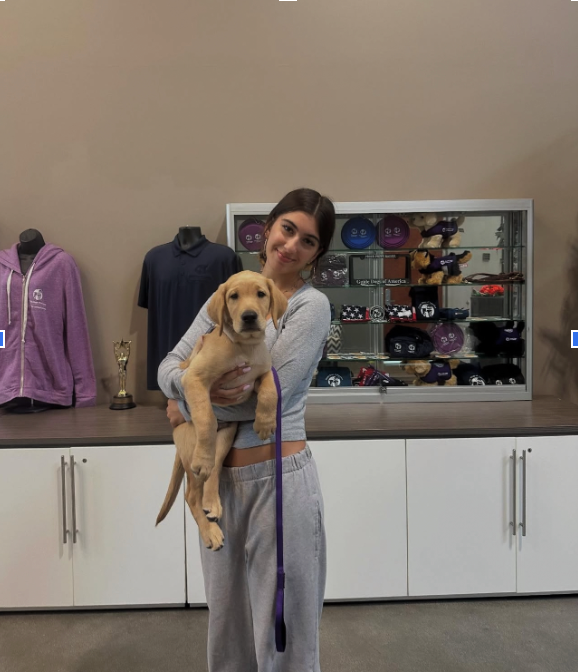
My name is Sadey, and this is Murphy! Murphy is a yellow lab with a big heart and an even bigger purpose. I started puppy raising because I wanted to do something meaningful. I’ve always loved animals, but this experience goes beyond that. Raising Murphy isn’t just about teaching commands or guiding him through social situations. It’s about preparing him to change someone’s life for the better. What drew me to puppy raising was the chance to make an impact. Murphy is in training to become a guide dog, and I am so grateful to be a part of his journey. Helping him grow into a calm, confident, and dependable partner has taught me so much about responsibility. At the same time, this work connects deeply with my interests in social justice, human rights, and law. I believe everyone deserves access, autonomy, and dignity! Whether that’s through the legal system or through a dog like Murphy offering independence to someone who needs it. My passion for advocacy drives me, whether I’m helping train a future service animal or studying the systems that shape people’s lives. Most importantly, I’ve learned that change doesn’t always have to be loud and powerful. Sometimes it looks like quiet consistency, patience, and love; that is exactly what Murphy has taught me. That’s the kind of impact I hope to make both now and in the future.


Donation info
Donate to GDA here:
https://give.guidedogsofamerica.org/campaign/754461/donate?utm_source=homepage&utm_medium=gdaweb&utm_campaign=2026
Community Outreach & Impact
AllThePAWSabilities isn't just about training and raising Murphy. I aspire to educate our community about service animals, disability advocacy, accessibility, and the life changing partnerships between guide dogs and the people they serve. This page documents our outreach efforts and educational projects allowing visitors to follow the growth and impact of our mission.
Why Community Outreach Matters:
Many people have misconceptions about service dogs, guide dogs, therapy dogs, and emotional support animals. Through awareness, I hope to i, promote respectful interactions with working dogs and encourage greater accessibility for individuals with disabilities. Any form of awareness helps create a more informed and inclusive community!
Educational Project:
AP Language & Composition Synthesis Research
As part of my AP Language course, I completed a synthesis paper focused on the debate surrounding emotional support animals and service animals under U.S. federal law.
The project required extensive research using government publications, disability advocacy organizations, academic journals, and legal sources to better understand the following topics:
-The differences between guide dogs, service dogs, therapy dogs, and emotional support animals
-Americans with Disabilities Act (ADA)
-Public access rights
-The importance of proper training and certification
-How service and guide animals improve independence and daily life
I also presented this research to my AP United States History class allowing me to educate my classmates about responsible service animal use and the importance of protecting legitimate working dog teams.
Click this link to read my essay!
https://docs.google.com/document/d/1fV_i0PTQNXabbRVxSp4eWI-VoRS2a92Ya6KOh7yWZdo/edit?usp=sharing
Ongoing Research Project:
As part of my commitment to disability advocacy and public education, I am currently conducting my own research paper examining the roles, regulations, and societal impacts of guide dogs, service dogs, therapy dogs, and emotional support animals. This research combines academic sources, government publications, disability advocacy organizations, and firsthand experiences from raising a guide dog in training. My goal is to provide accurate, evidence based information that helps educate others and reduce misconceptions. I hope to promote greater understanding of the important role assistance animals play in providing independence and accessibility.
This page will be updated as the research progresses. The completed paper and supporting source will be attached here upon completion!
Step 1: Say the name clearly
Start by saying your dog’s name in a clear, friendly tone. For example:“Murphy!”
Step 2: Immediately offer a reward
Right after saying the name, immediately give a small treat. Timing is important. The reward should come within 1 to 2 seconds so your dog connects the name with something positive.
Step 3: Repeat several times
Practice this in short sessions of about 5 to 10 repetitions. Keep the mood upbeat and consistent throughout.
Example: “Murphy!” (Murphy looks at you) → “Good boy!” and treat.
Step 4: Practice in different environments
Once your dog responds reliably at home, begin practicing in other quiet environments such as your backyard or a calm park.
Step 5: Gradually reduce treats
Over time, begin to phase out the treat rewards. Continue using verbal praise like “Good boy” so your dog stays motivated to respond without always expecting food.
Begin by building positive associations with your dog's name. For example, I clearly say “Murphy,” and immediately follow the verbal cue by offering a treat. This immediate positive reinforcement helps him understand that hearing his name results in something good. Over time, this consistent recognition strengthens your dog’s responsiveness and encourages them to view their name as a reliable signal to pay attention.


Name Recognition
Potty Training (Foundations)
When beginning potty training, introduce your dog to hard surfaces before transitioning to grass. This may seem odd at first, but it trains your dog to release themselves on different surfaces, which may be important for future situations. Also, it typically reduces distractions and helps them focus on the task. To make this efficient as possible, select a specific potty spot and have them return to that location consistently to establish a routine.
The verbal cue used for GDA training is “Get busy” to communicate that it is time to relieve. With repetition, your dog will begin to connect the cue with the behavior. After he successfully eliminates, offer a calm verbal praise such as “Good boy” or “Good busy” but it is crucial that you do not involve this moment with treats. Providing treats during potty time may encourage your dog to release himself in inappropriate places simply to earn a reward. Verbal praise does the job and prevents accidental reinforcement of unwanted behavior.
Step 1: Start on a hard surface
Begin potty training by introducing your dog to relieve on a hard surface like concrete or asphalt. This helps reduce distractions and teaches them to go on different surfaces, which may be useful in future situations.
Step 2: Choose a consistent potty spot
Pick a specific location for potty breaks. Always bring your dog to this same spot so they begin to associate that area with the behavior. Consistency helps establish a reliable routine.
Step 3: Use the verbal cue "Get busy"
As soon as you arrive at the potty spot, calmly say the phrase "Get busy." Use the same tone and wording each time. This teaches your dog to connect the cue with the act of relieving.
Step 4: Wait patiently without distractions
Stand quietly and give your dog time to sniff and go. Avoid interacting or playing during this time to help your dog focus on the task.
Step 5: Give calm verbal praise only
As soon as your dog successfully eliminates, offer gentle verbal praise such as "Good boy" or "Good busy." Keep your tone soft and calm.
Step 6: Do not offer treats during potty time
Avoid using treats as a reward after your dog relieves. Treats may accidentally reinforce inappropriate elimination in the future. Verbal praise is enough to mark the behavior positively without creating confusion.
Step 7: Transition to grass after consistency
Once your dog consistently responds to the "Get busy" cue and eliminates the hard surface, begin transitioning to a grassy area. Keep the same verbal cue and routine in place during the transition.
Crate Training (Intermediate)

Introduce the crate by using treats as “gentle lures”. Hold a treat near your dog’s nose and guide him/her into the crate so that he associates entering the crate with a positive experience rather than being forced. Aim to have your dog spend a cumulative total of at least 2 hours in the crate during the daytime. These shorter sessions prevent confusion and help him understand that the crate is a calm safe space, not just a place that they will sleep at night. By adjusting to the crate during the day and gaining a sense of familiarity, your dog will adjust more easily to longer night time crating.
Step 1: Use treats as gentle lures
Begin by holding a treat near your dog’s nose and slowly guiding them into the crate. This helps your dog associate the crate with positive experiences rather than feeling forced or confined.
Step 2: Allow your dog to explore the crate freely
Keep the crate door open at first. Let your dog enter and exit on their own. You can place a soft blanket or favorite toy inside to make it more inviting.
Step 3: Practice short crate sessions during the day
Have your dog spend short, supervised periods in the crate throughout the day. Aim for a cumulative total of at least 2 hours spread over several sessions. This helps your dog understand that the crate is a calm, safe space, not just for nighttime sleeping.
Step 4: Stay nearby during early sessions
During the initial crate sessions, stay close by to reassure your dog. Gradually increase the distance and duration as your dog becomes more comfortable.
Step 5: Avoid using the crate as punishment
Never use the crate for discipline or time-outs. It should always be a positive, relaxing place for your dog.
Step 6: Build up to nighttime crating
Once your dog is comfortable spending time in the crate during the day, transition to longer overnight stays. Familiarity with the crate makes this transition much smoother and less stressful.

Paw Pad
(Intermediate)

If you are working with a paw pad, here are some steps you can take to head in the right direction. Begin by positioning your foot against the side of the paw pad, specifically on the left side of your body. For guide dogs, it's crucial that they practice being on your left side because once paired with someone, they will almost always be on the left side of them. As your dog steps onto the paw pad with his/her two front paws, immediately “pezze” small treats to reinforce the behavior and help them understand that having 2 paws on the paw pad is the goal. Once they adjust to the paw pad and spend more time training with it, “pezzing” treats isn't necessary. You can gradually reduce the frequency of treats. This shift encourages him/her to remain on the paw pad because it is expected, not because a reward is present. As you progress, slowly increase your distance from the paw pad by taking small steps away. It is important that he maintains his position. Over time, this not only builds duration and distance, but confidence.
To intensify the training, introduce controlled distractions such as toys on the ground, gentle noises, or movement. You might need someone else to help you with these tasks since if you are the one training at that moment, you don’t want to be a distraction. The goal is to teach your dog that even when faced with minor challenges, they must stay on the paw pad until released.
Although having your dog stand on the paw pad is cool, you can have them sit down with two paws on the pad and/or lay down with their elbows on the pad. This reinforces impulse control, it can strengthen their body awareness, and will prepare them for any other advanced training tasks!

Leash Tethering (foundations - intermediate)
Leash tethering helps your dog develop impulse control and understand that pulling will not allow them to move forward. Whenever your dog begins to pull and tension forms on the leash, immediately stop moving. Be still and neutral, avoid pulling back or giving any verbal corrections. The moment your dog notices tension and releases it on their own, use the marker word “Nice!” and follow it with a treat. This specific protocol is specific to guide dog training, but you can always use other verbal praise such as “Good boy” etc. This reinforces the idea that a loose leash is what earns rewards and continued forward movement.
To amplify this, you can practice this in environments with mild distractions. Position your dog near toys, people, or other dogs at a safe distance. Walk past these distractions as you normally would. If your dog begins to pull toward the distractions, allow the leash to become tight but keep yourself in place.Once they ease the tension for the leash, immediately give verbal praise and follow that with a treat. Over time, this teaches your dog that pulling stops them from forward movement and maintaining a loose leash brings positive reinforcement and movement forward.

Socialization


Effective socialization builds confidence and resilience by helping your dog develop positive associations with unfamiliar people, animals, environments, and experiences. Begin by introducing new stimulants gradually, ensuring that each exposure is calm, predictable, and matched to the dog's comfort level. It is really important that you ease your dog into this rather than rushing this process. Use consistent positive reinforcement such as treats and verbal praise whenever your dog engages with a new situation in a calm or curious manner. This reinforces the idea that new environments and individuals are safe and rewarding.
Start with small and controlled interactions with one dog or meeting a new person. Once your dog demonstrates comfort and stability in these settings, progressively work toward more stimulating experiences. These can be busier environments, groups of people, or unusual settings. Keep all beginning socialization sessions short and structured. The goal is quality, not quantity. Brief positive encounters are far more effective than lengthy or overwhelming ones.

ADA - Why is it important and how does it apply to GDA
The Americans with Disabilities Act (ADA) recognizes guide dogs (also known as service dogs) as necessary companions for duties connected to a person's condition, not just pets, and ensures the right of people with disabilities to be accompanied by their dogs in public. Unlike emotional support or therapy dogs, guide dogs are task-trained to carry out specified jobs, such as guiding a visually impaired person. They also have public access rights, with regulations permitting questions regarding the dog's impairment and necessary tasks.
Important ADA Guidelines for Guide Dog:
-Public Access: With very few exceptions, guide dogs are allowed to accompany their handlers wherever they go in public (stores, restaurants, hotels, etc.).
-Employment & Housing: Unless it would be an undue burden, employers and landlords are required to permit guide dogs as a reasonable accommodation in the employment (Title I) and housing (Fair Housing Act).
-Transportation: The Department of Transportation (DoT) has regulations governing service animals on airplanes that call for pre-submitted paperwork.
Puppy Raiser Info
Roles of puppy raisers:
-
Teach basic obedience (potty training, sit, etc)
-
Socialize by exposing them to new situations
-
Provide a loving and supportive home
-
Practice positive reinforcement
Puppy raiser requirements:
-
Have a flexible schedule
-
Attend puppy raiser meetings
-
Travel to GDA and TLC campus for vet care/evaluations
-
Complete monthly online reports
Getting a puppy:
-
Raisers name their puppy (you are given a letter from the alphabet)
-
Puppy K classes taught by area leaders
-
Puppy raiser manual is important to read
-
The first month of having a puppy is all about them adjusting to your home